Starting a home Pilates routine is easy. Keeping it is the hard part. Most people quit not because Pilates is too difficult, but because the plan was too big, too vague, or too disconnected from the rest of their life. The fix is to build something small enough to repeat and structured enough to progress.
According to beginner guidance, what is a reasonable starting schedule for home Pilates?
Select one answer.
Start smaller than feels impressive
The most common mistake is scheduling hour-long sessions from day one. Beginners do better with short, frequent practice. Guidance from the Pilates community suggests setting aside time for two or three short sessions a week rather than one long one, and choosing a single focus for each session (Merrithew).
A workable starting point:
- 20 minutes, three times per week for the first month.
- One focus per session — core, posture, or mobility. Not all three.
- Same days, same time where possible, so the decision is already made.
If 20 minutes feels like too much, cut it to 10. A routine you actually do beats a routine you admire.
Set up a space you don't have to think about
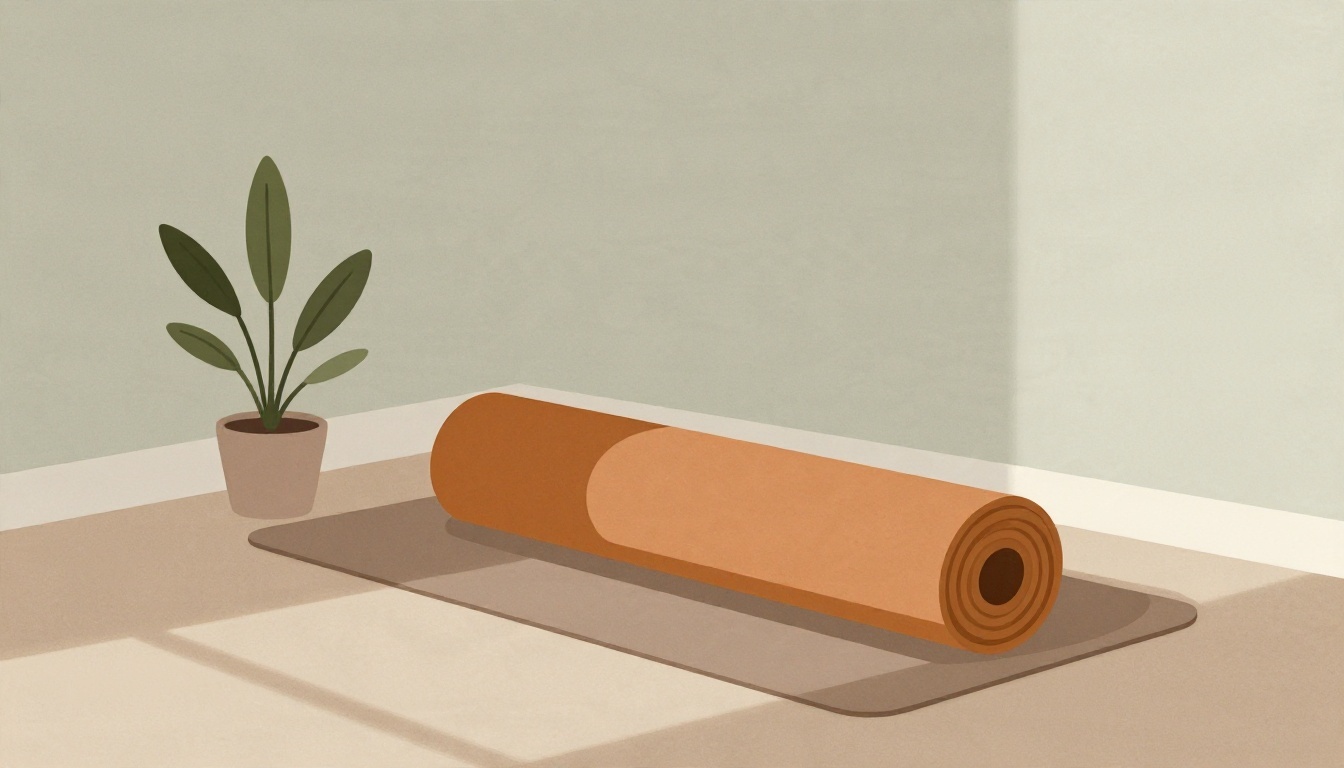
You do not need a studio. You need a corner. A quiet spot with enough room to lie down and extend your arms and legs is sufficient, and a mat or carpet is the only real requirement to begin (Daily Burn).
Keep it ready:
- Roll the mat out and leave it out, or store it where setup takes under a minute.
- Keep water and any small props within reach.
- Remove one friction point — a cluttered floor, a missing mat, a laptop you have to hunt for.
Learn the foundational movements first
Pilates rewards precision over intensity. Beginners should focus on foundational movements such as the Hundred, Roll-Up, Single Leg Stretch, and Plank before adding variations (Daily Burn).
A simple four-week progression:
- Week 1: Learn the Hundred and Roll-Up. Slow, controlled reps only.
- Week 2: Add Single Leg Stretch and a modified Plank.
- Week 3: Link the four into a short flow, repeating twice.
- Week 4: Add one new movement and keep the rest the same.
Quality of movement matters more than the number of exercises. Pilates is low-impact and adaptable, which is part of why adherence tends to be higher than with high-intensity formats (Daily Burn).
Build a weekly rhythm, not a daily grind
Consistency comes from rhythm, not willpower. A pattern that works for many home practitioners:
- Two short mat sessions during the week.
- One longer session on a weekend day.
- One rest or walk day between sessions.
If you miss a session, resume at the next scheduled slot. Do not double up to "catch up." The goal is a practice you can still be doing in a year.
Add a faith layer if that matters to you
For many people, Pilates becomes more than exercise when it is paired with reflection. A simple structure for a 15–30 minute faith-centered routine is a gratitude opening, three to five Pilates exercises with scripture prompts, short worship pauses, and a closing moment of stillness (TikTok – Sunshine Pilates).
You can also treat breath work as a form of moving meditation, using controlled breathing to create space for reflection during your session (She's Different).
Keep it simple:
- Open with one sentence of gratitude.
- Move through your usual exercises.
- Pause between sets for a single verse or a breath of prayer.
- Close with 30 seconds of stillness.
Track only what helps
Tracking everything becomes its own chore. Track two things: sessions completed and one thing that felt better — a stronger plank, less back tension, easier breathing. That is enough to see progress without turning practice into admin.
A quick checklist
- Two to three short sessions scheduled this week
- One focus chosen per session
- Mat and space ready in under a minute
- Four foundational movements learned
- One faith or reflection element added, if desired
- Sessions and one improvement noted
How the Featured Expert Can Help
Mh Pilates And Wellness is a local Pilates studio in Newport, NC, offering faith-filled classes for men and women of all ages. The studio focuses on mindful movement as a sacred practice — building strength, restoring balance, and nurturing inner peace in a supportive environment. If you want guidance before committing to a home routine, you can book a free consultation at Mh Pilates And Wellness.
Test your understanding
Before you build your plan, check one key point about getting started at home.
Quiz: According to beginner guidance, what is a reasonable starting schedule for home Pilates?
- A) 20-minute sessions three times per week
- B) 60-minute sessions every day
- C) One 90-minute session per month